Rome catacombs or Paris catacombs?
Ready to go underground?Every tour here ends up on the same staff-led walk. Pick the one whose journey you want.
Compare the sixThe stories are Paris
The cinema. On 23 August 2004, French police on a training exercise found a clandestine cinema and bar in a disused quarry under the hill of Chaillot, beneath the Trocadéro, about 20 metres down and covering around 400 square metres. There was a projector, a screen, seating, a bar and a stock of films from the 1950s and 1960s, plus a tripwire camera rigged to play a recording of dogs barking. When police returned three days later the power and phone lines had been cut and a note had been left telling them not to come looking — the wording is reported differently by different outlets. It was attributed to La Mexicaine de Perforation, linked to the collective Les UX.
Why it is illegal. Access to the Paris quarries is banned by a prefectural order of 2 November 1955, which the French Interior Ministry confirmed was still in force in a 2025 answer to the Senate. The fixed fine has been €135 since November 2024, rising to €375 if it goes unpaid. Any older figure you read has been overtaken.
Philibert Aspairt. A doorkeeper at the Val-de-Grâce hospital who went into the quarries with a lantern on 3 November 1793 and did not come out. His body was found eleven years later and buried where it lay. Cataphiles treat him as their patron saint. His tomb is in the off-limits network, not on the museum route.
The 2017 teenagers. Two boys of 16 and 17 went in on 12 June 2017 and were found by rescue dogs in the early hours of 14 June, treated for hypothermia after around three days underground. They were in the illegal network. The museum operator told AFP that nobody has ever been lost in the public section.
Scale explains most of the confusion. The Paris quarry network runs to roughly 280 km; the legal museum route is 1.5 km with 243 steps at an average of 14°C, and the official site says the ossuary holds several million people. Paris itself makes the distinction: catacombes.paris.fr says that applying the name “the Paris Catacombs” to the whole quarry network is an extension and erroneous, and that properly it covers only the eighteenth-century ossuary.
Rome works completely differently
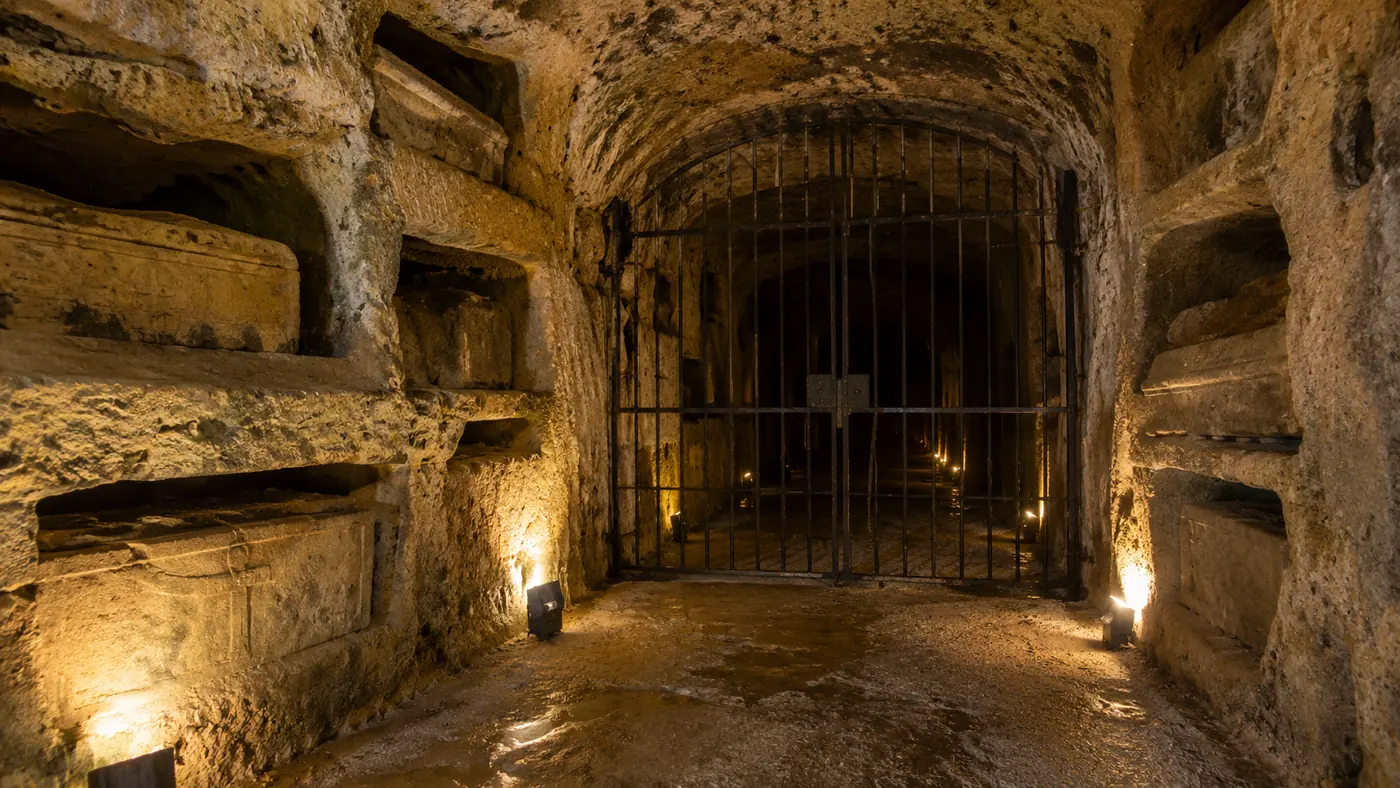
You visit through the front door of a ticket office run by the Holy See. Seven catacombs are open to the public out of more than sixty known, all of them guided-only. At San Callisto the rules say that all tours are led by authorised personnel, that the catacombs can only be visited in groups of at least two, and that nobody may visit alone, leave their group along the way, or go beyond the gates that mark the public route. Tours leave every thirty minutes in five languages and take about forty minutes.
There is no legal-versus-illegal split, because there is no parallel network under Rome that anyone is sneaking into. You cannot get lost, because you are never off the route. The nearest thing to a Roman version of the Paris stories is Antonio Bosio, who nearly lost himself in Domitilla in 1593 — an unlit, unmapped exploration four centuries before that catacomb was properly excavated, not a visit.
The practical answer
If you are going to Rome, you are going to a cemetery with frescoes in it, in daylight, by appointment. San Callisto opens 09:00 to 12:00 and 14:00 to 17:00, closes on Wednesdays, and the burial niches are open and empty rather than stacked with bones — the reason for that is here. Photography is forbidden. It is a guided forty minutes and then you are back in the sunlight on the Appia Antica, which is honestly the better half of the day. What the visit is actually like, step by step.
 Most booked
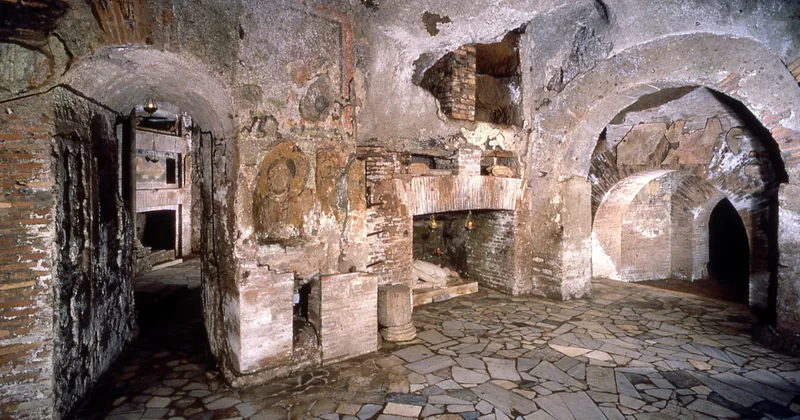
Rome: Catacombs of St. Callixtus Entry Ticket & Guided Tour
 Transfer included
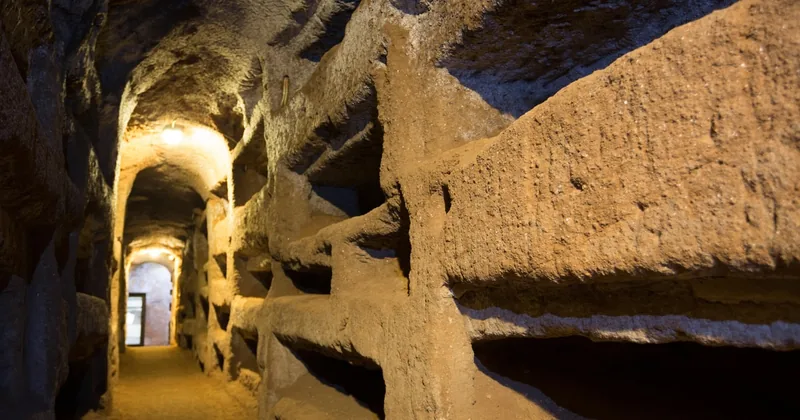
Rome: Catacombs Guided Tour with Transfer & Capuchin Option
 Appian Way
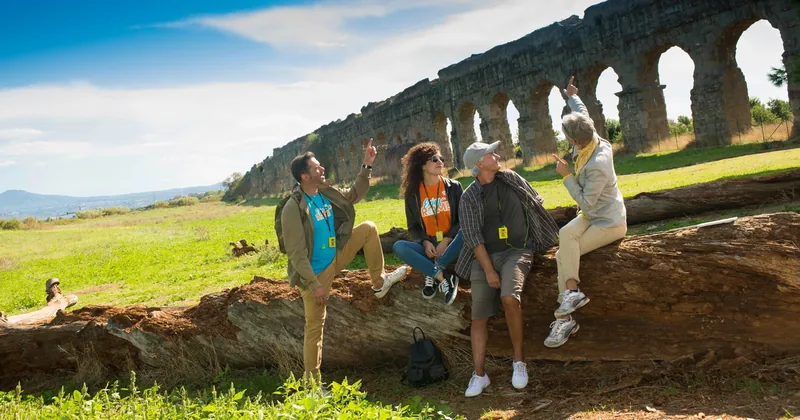
Rome: Catacomb of St. Callixtus and Appian Way Guided Tour
Frequently asked questions
Why is it illegal to enter the catacombs?
That is Paris, not Rome. Access to the Paris quarry network is banned by a prefectural order of 2 November 1955, with a fixed fine of €135 since November 2024 rising to €375 if unpaid. Rome’s catacombs are ticketed and open to anyone who books — you just cannot go round them alone. How a visit works.
Are the Rome catacombs the same as the Paris catacombs?
No. Rome’s are early Christian cemeteries dug outside the city walls, visited on a guided route with a ticket. Paris’s are an eighteenth-century ossuary in former quarries, with a 1.5 km museum route and a roughly 280 km off-limits network around it. Even the Paris site calls the wider name erroneous.
Can you get lost in the catacombs in Rome?
No. Groups are led by the catacombs’ own staff, the minimum group size is two, and the rules forbid leaving your group or passing the gates that mark the public route. The stories about people lost underground come from the illegal network in Paris. Whether the Rome visit is for you.